
The HOA-OS Blog
Practical advice, product updates, and community management insights for HOA boards.
Sending HOA Dues to Collections: Agencies, Attorneys and the Rules They Follow
What HOA collection services do, what the board decides before it refers a delinquent account, who pays the collector, and the federal rules that can apply.

HOA Payment Plans for Owners Who Have Fallen Behind
How a board writes payment plan standards, what the owner signs, and what happens after a missed installment, with Texas and California as examples of states that set rules.

HOA Late Fees and Interest: What the Board Can Charge
Where an HOA's power to charge late fees and interest comes from, how Florida and North Carolina treat them, and what the board should write down before the first fee posts.
HOA Collection Policy: How to Write One the Board Will Follow
A written collection policy tells owners and the board what happens when dues go unpaid, step by step. This guide covers what to put in the policy, how to adopt it and how to apply it evenly.
The HOA Rental Policy Playbook
A six-step sequence for building an HOA rental policy: read the declaration, decide rule versus amendment, register tenants, enforce through the owner, set only the fees the documents allow, and review it every year.
Minimum Lease Terms and Lease Approval in an HOA
A minimum lease term sets the shortest lease an owner may sign. How it differs from a short-term rental rule, how whole-home rules and lease approval fit in, and where state law sets the limits.
HOA Rental Fees: What an Association Can Charge Landlords
Lease registration fees, move-in fees and deposits against common-area damage each need their own authority and do different jobs. How a board decides what it can charge landlords, and what to write down before it does.
When a Tenant Breaks HOA Rules, Who Is Responsible?
When a tenant breaks a community rule, the association's relationship is still with the owner. Who gets the notice, who carries the fine, and how to handle a tenant violation without treating renters differently.
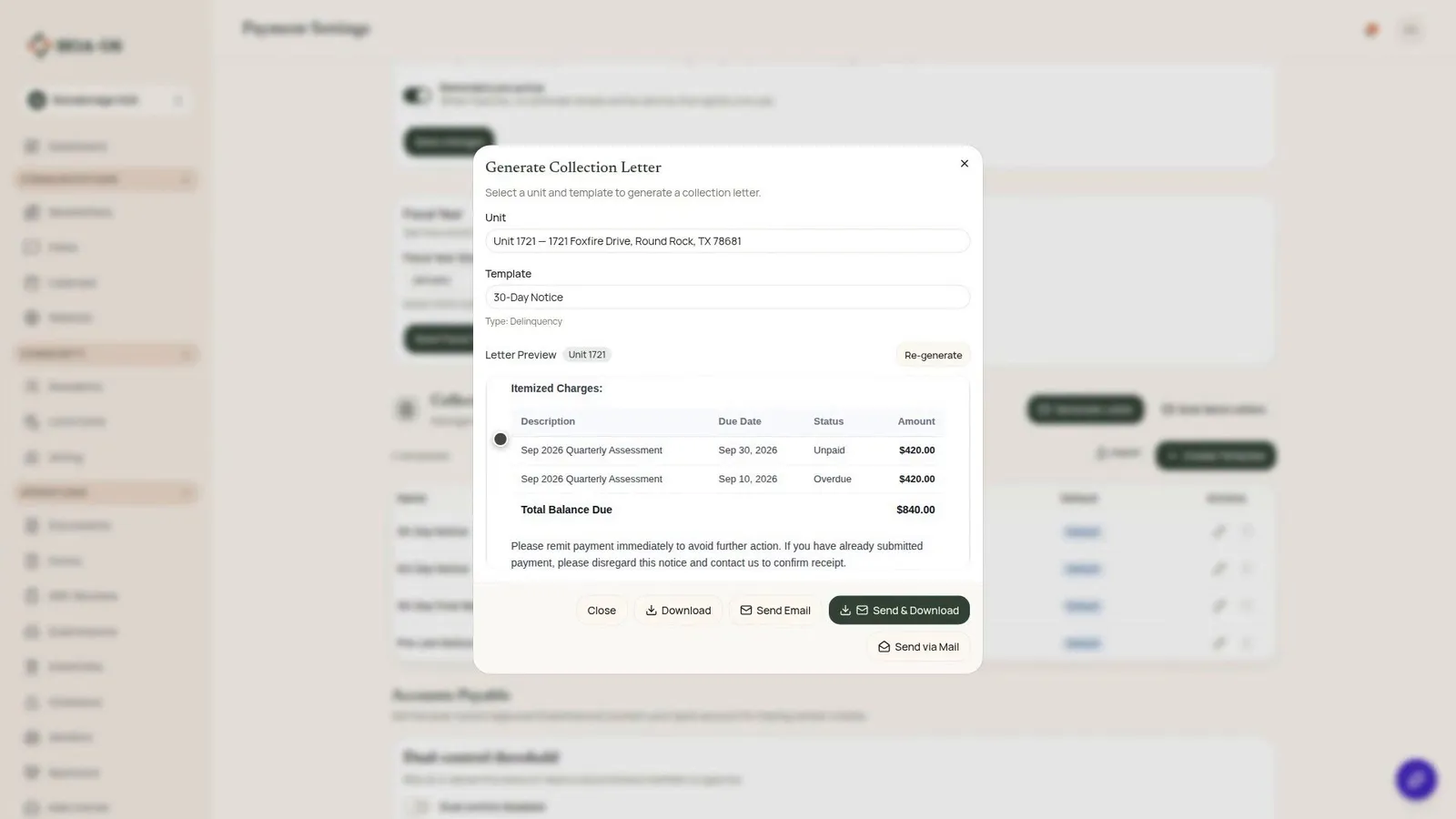
How does a board send a delinquent owner a formal collection letter without writing it from scratch every time?
A walkthrough of collection letter templates in HOA-OS. The board edits a starter template once, then generates a letter for one lot with its owner, balance and charges filled in from the community's ledger.
Tenant Registration: What an HOA Can Ask Landlords For
A tenant registration rule tells the board who lives in each rented home. What a registration form can reasonably cover, where state law limits the list, and the questions it should never ask.
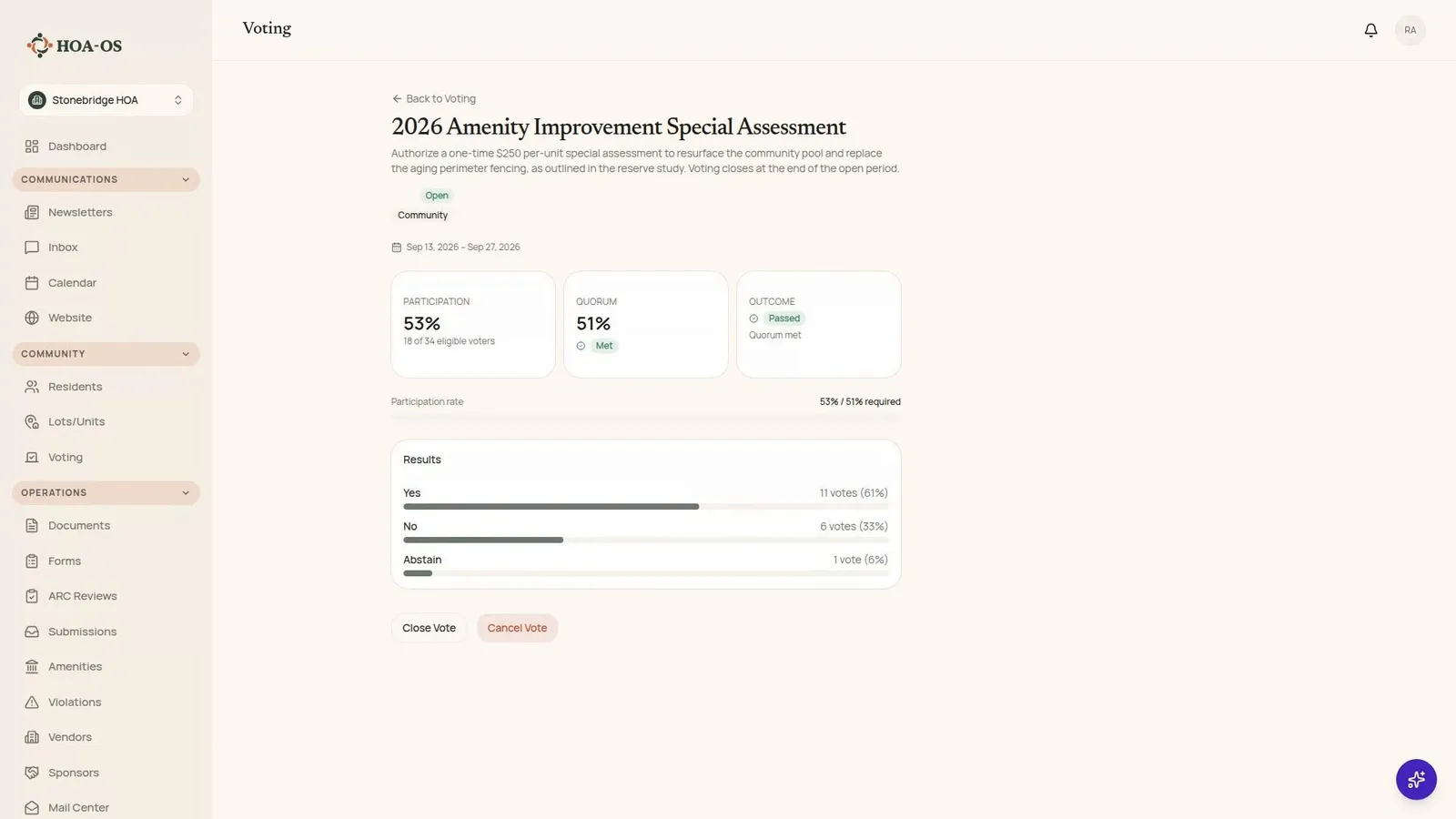
How does a board run a vote, reach quorum, and end up with an outcome it can prove later?
A walkthrough of running a community vote in HOA-OS. The board opens a motion, members answer it, participation is tracked against the community's own threshold, and closing the vote leaves a counted record on the motion itself.
HOA Rental Caps: How Leasing Limits Work
A rental cap limits how many homes can be rented at once. How a cap is written, how the waitlist and hardship exceptions run, and what happens to owners who were already renting when it passed.
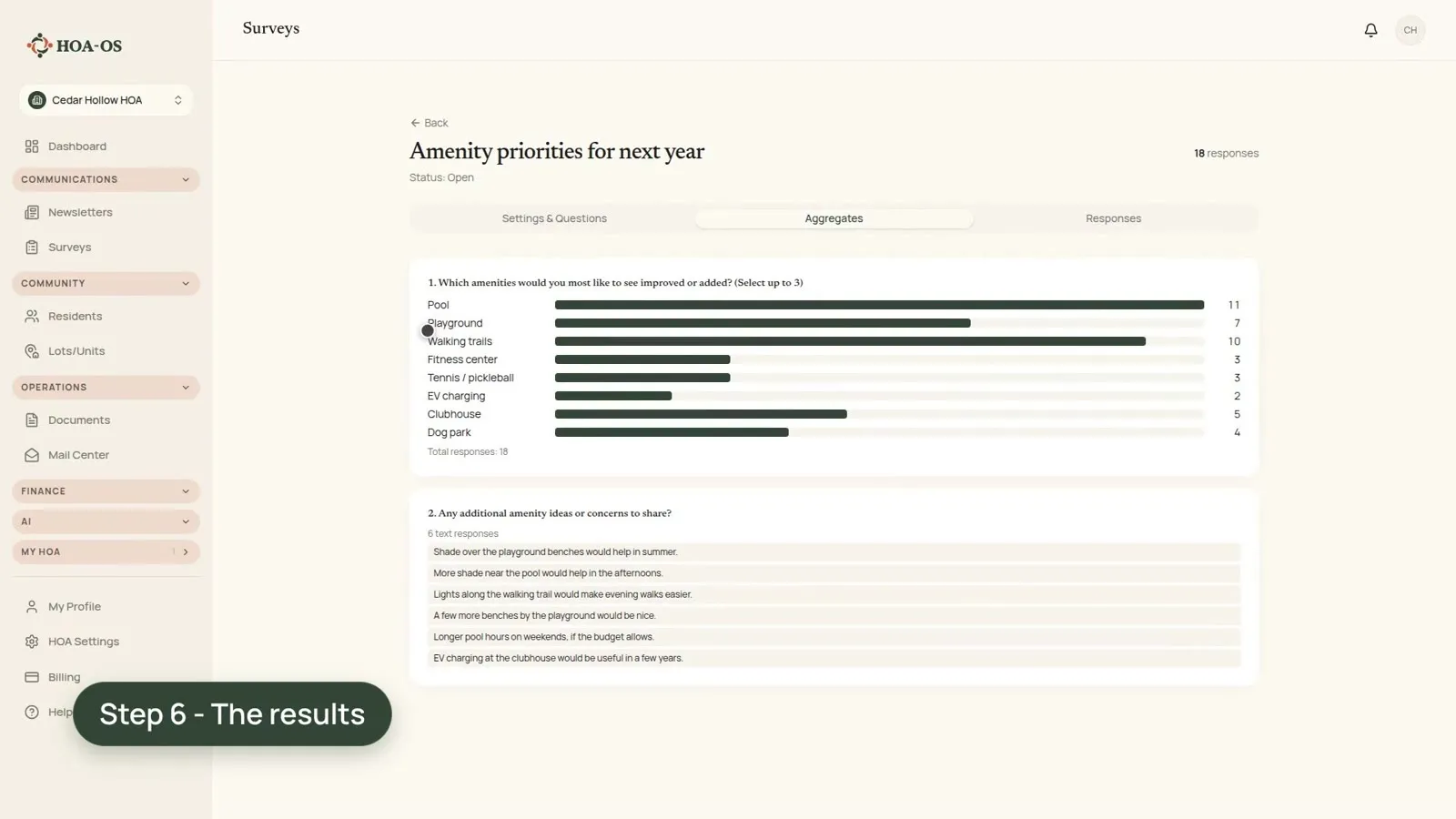
How does a board find out what residents think before it decides something?
A walkthrough of sending a resident survey in HOA-OS. The board picks a ready-made survey, sends it to its members before the meeting, and reads the answers back as counts.
HOA Rental Restrictions: What Your Board Can and Can't Regulate
HOA leasing limits come from three places: the recorded declaration, rules the board adopts, and state law. How to tell which one a proposed limit needs before the board drafts it.
The HOA Amenities Playbook
A sequence a self-managed board can run to put its common area rules on solid ground: inventory the amenities, confirm authority, write and adopt the rules, set up reservations and guests, enforce evenly, and plan for liability and upkeep.
Amenity Liability: Signage, Waivers and What Insurance Expects
What a waiver does and doesn't do for an HOA pool or clubhouse, what a swim-at-your-own-risk sign does and doesn't do, and the signage, records and insurance questions a board should settle before someone gets hurt.
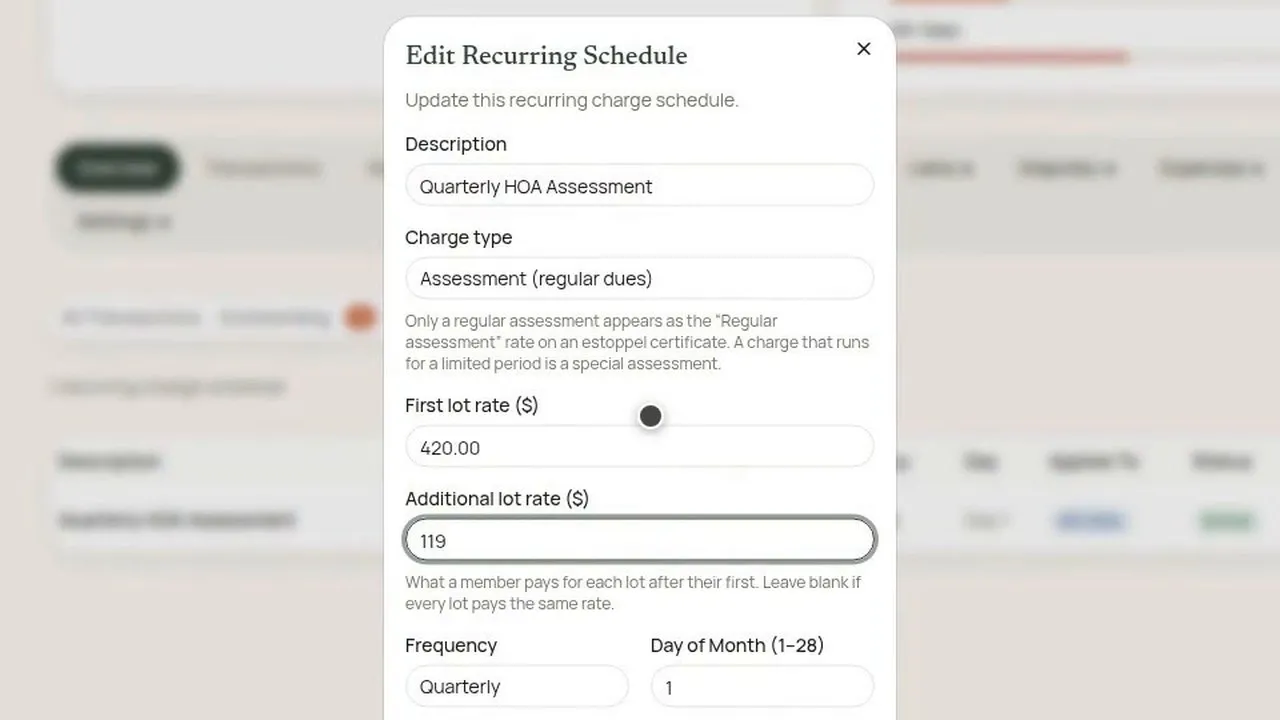
How does a board set up autopay and recurring dues?
A walkthrough of recurring dues and autopay in HOA-OS. The board writes a quarterly assessment as a schedule once, and a resident turns on autopay from their own account.
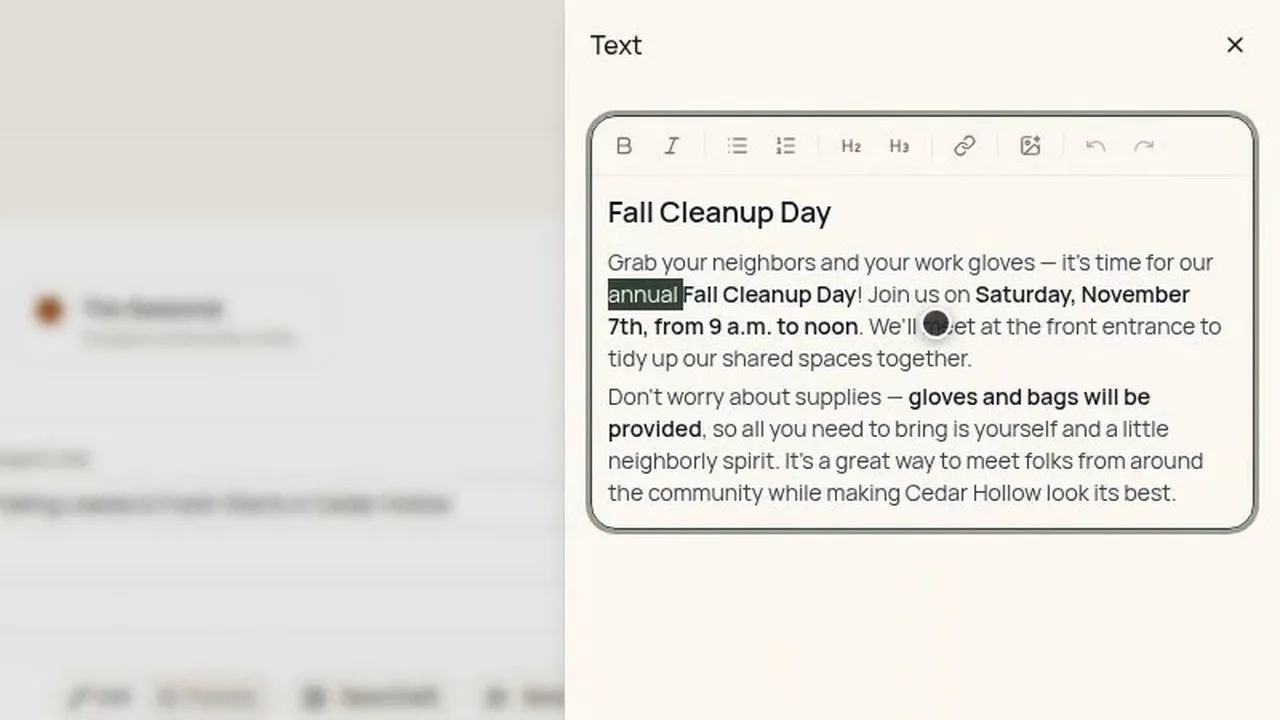
How does a board put out a community newsletter when nobody on it wants to write one?
A walkthrough of a community newsletter in HOA-OS. The board types a few notes under three sections, adds two more, then reads the draft that comes back and edits it.
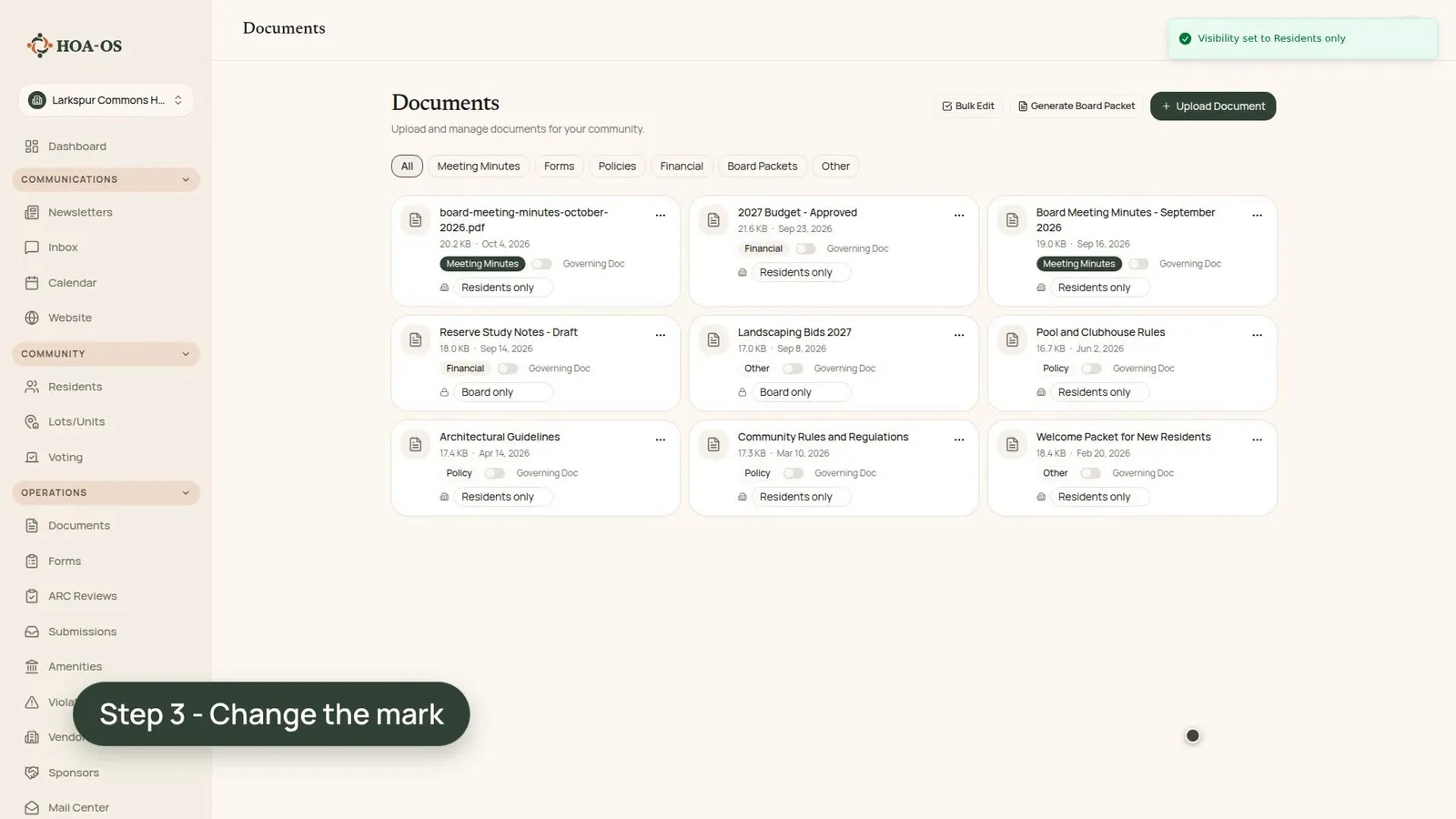
How does a board share community documents with residents and keep some for the board only?
A walkthrough of the document library in HOA-OS. The board sorts its files by category, marks each one for residents or for the board, and the same library is shown signed in as a resident.
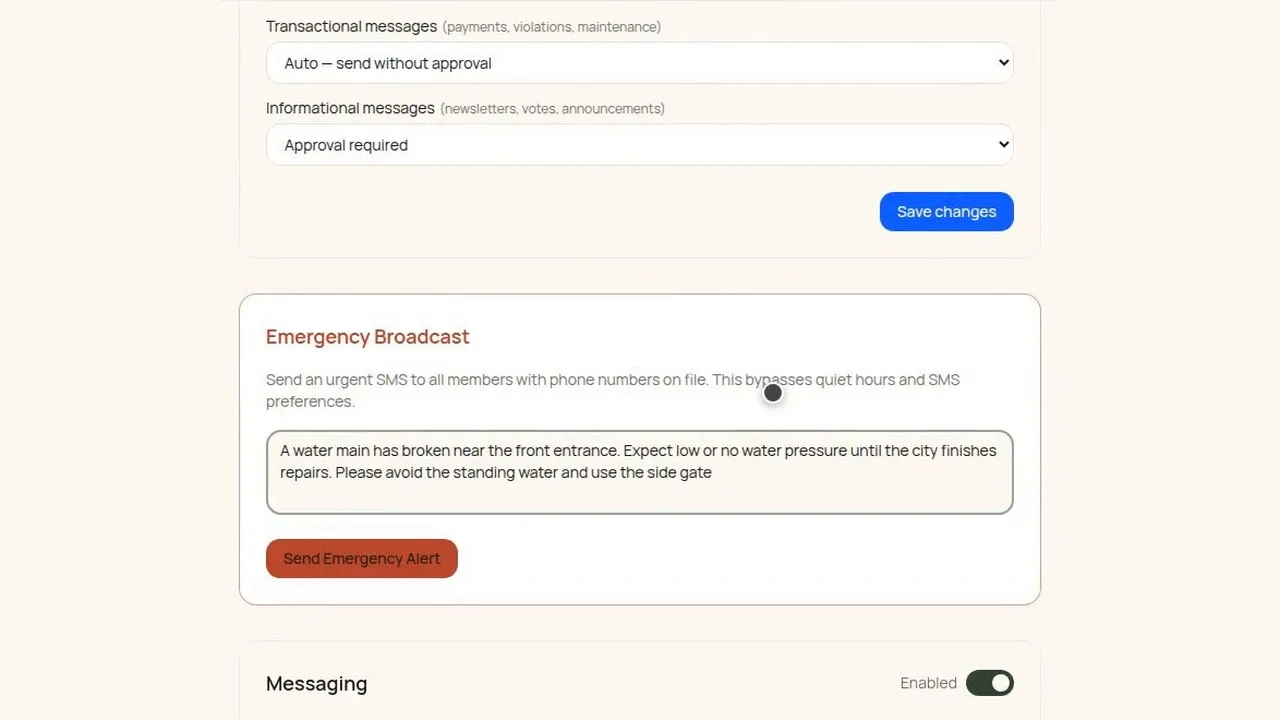
How does a board send an emergency text to residents?
A walkthrough of an emergency text in HOA-OS. The board turns texting on, writes one message in the Emergency Broadcast card, reads it back in the confirm step and confirms it.