
Where is your association's original recorded declaration? Self-managed boards tend to give one of three answers. The title company has it. The previous secretary has it. Nobody is sure.
Document retention sounds like housekeeping until the day it isn't: a records request with a statutory deadline, a roof warranty claim, an insurance audit, a lawsuit where the minutes are the only evidence the board deliberated at all. The work of retention is small and boring, which is why it gets skipped, and the cost of skipping it shows up years later in somebody else's term.
Start with the three-bucket sort
Every association document falls into one of three groups, and sorting them this way is faster than working from a list.
Keep permanently. No retention schedule your attorney or CPA hands you will tell you to discard these. Recorded declaration and all amendments. Articles of incorporation. Bylaws and rules, including superseded versions with their adoption dates. Board and membership meeting minutes. As-built plans, surveys, plats, and permits. Deeds and easements. Insurance policies and claim files. Reserve studies. Tax filings.
Keep for a defined period. Invoices, bank statements, canceled checks, contracts after expiry, correspondence, violation files, and architectural applications.
Keep briefly, then dispose of them deliberately. Routine notices, duplicate copies, drafts, and vendor solicitations you did not act on.
The failure mode is not usually in the middle bucket. It is that permanent records get treated as ordinary paperwork, handed board to board in a banker's box, and eventually thinned by somebody being helpful.
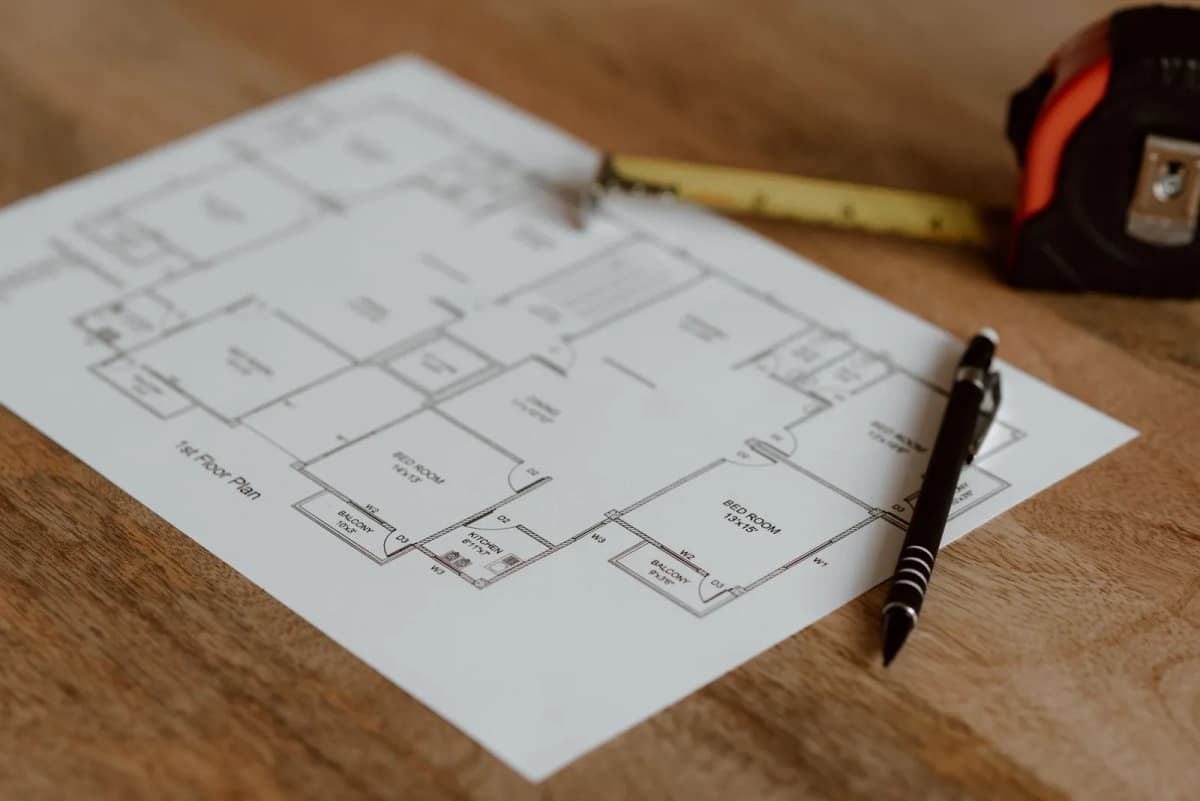
Photo by Anete Lusina on Pexels
Plans, permits, and warranties belong in the permanent bucket and almost never end up there. When the roof fails in year eleven and the warranty runs fifteen, the document that decides whether the association pays or the manufacturer does is a sheet of paper somebody filed in a folder marked "construction."
What the tax rules actually require
The IRS guidance on what kind of records to keep applies to your association's books the same way it applies to any small entity. It calls for a recordkeeping system that clearly shows income and expenses, with supporting documents behind the entries: sales slips, paid bills, invoices, receipts, deposit slips, and canceled checks.
Two specifics are worth writing into your policy. Employment tax records must be kept for at least four years if your association has any employees. And asset records need to outlast the asset itself, because you need them to compute depreciation and to establish gain or loss when the asset is sold. For a community that owns a clubhouse or equipment, that pushes those files into the permanent bucket regardless of what the general retention period is.
The IRS also states plainly that electronic records are held to the same standards as paper. Scanning is not a shortcut around the rules, but it is not a compromise either.
Where the exact years come from
There is no single national retention schedule for community associations, and any board that adopts one off the internet without checking is guessing.
Your numbers come from three places. Your state's community association statute, which often sets minimum retention and inspection periods. Your CPA or auditor, for financial records and tax support. And your attorney, for anything touching litigation, where a document you would otherwise be free to destroy has to be preserved the moment a claim is reasonably anticipated. That last one is worth understanding before you need it, because routine destruction of records after a dispute starts is a separate problem from the dispute.
CAI's homeowner and board education program covers governing documents and board responsibilities as its first module, which is a reasonable starting point for a new secretary who has inherited a filing cabinet and no instructions.
Write the policy, then make it somebody's job
A retention policy is one page. Document class, how long, who holds it, and where. Adopt it by board vote so it survives a change in officers, and note the adoption date in the minutes.

Photo by SHVETS production on Pexels
Then solve the actual problem, which is custody. Records held in one director's garage or one officer's personal email are records the association will lose. Digital storage every director can open removes the single point of failure, and it turns answering a records request into a search rather than an expedition. Every HOA-OS plan includes document management. A board can export its data in CSV and JSON at any time while the account is active, and for 30 days after service ends for any reason; messaging and chat-agent history are the one exclusion.
Do a handover audit at every turnover. New officers should sign for what they received, and the list should be in the minutes. It is the only mechanism that catches a gap while somebody still remembers what filled it.
Sources
- What kind of records should I keep, Internal Revenue Service
- Education for Homeowners, Community Associations Institute
Related Reading
- Can HOA Board Members Be Sued? Liability in Plain English
- HOA Records Requests: What Your Board Must Provide
- The HOA Secretary: Records, Minutes, and Legal Cover
- How to move your HOA records out of a management company
The rule is simple enough to say in one line: permanent documents are never discarded, everything else has a stated period and a stated owner, and a record nobody can find is a record the association does not have. Compare plans and document limits.