
The contact address on your community page goes to one person. Whoever holds the seat reads what residents send, and when they rotate off the board, three years of it goes with them. The next person starts cold.
This walkthrough shows the alternative: one inbox the whole board shares, a status on every thread, and replies that go out from the board rather than from the person who typed them.

What the video covers
- Why a single contact address makes the history one person's property
- What the board sees when every message is in one list
- The three statuses on a thread: new, waiting on the resident, resolved
- Vendors and prospective buyers, in the same list as residents and labeled for what they are
- Who a message came from, kept on the thread rather than in somebody's memory
- Answering a thread so the reply goes out from the board
- How the status moves itself when the board replies, and how the board can overrule it
- What this does not change, said plainly
The full walkthrough, in words
The address on the community page goes to a person. Whoever holds the seat reads what residents send, and nobody else does, and when they rotate off the board three years of it goes with them.
In HOA-OS those messages arrive in one inbox the board shares, and every thread carries where it stands, so the next person to open it can see what has happened without asking anybody.
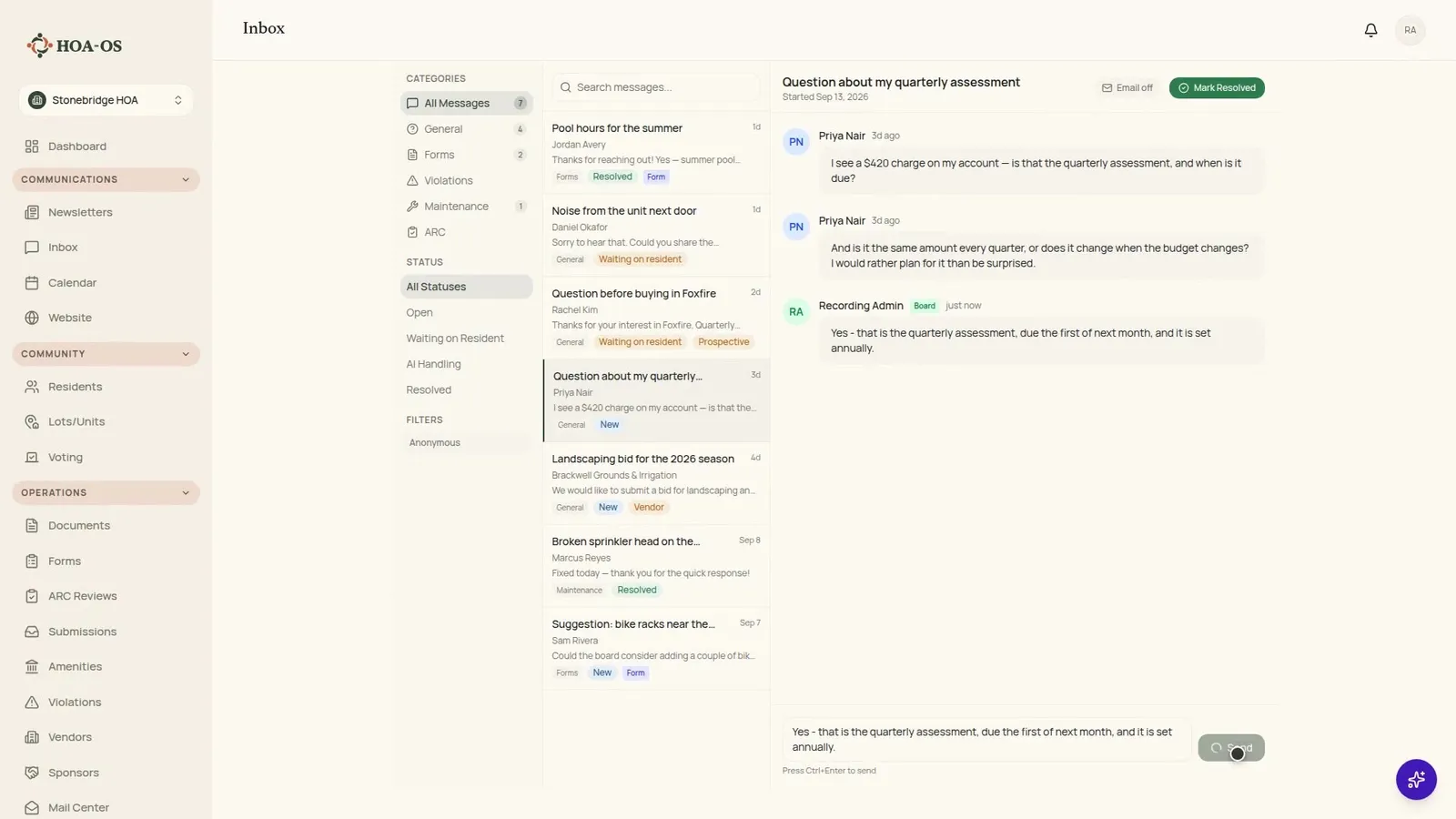
This is that inbox. Everything the community has written in, in one list, and it belongs to the board rather than to whoever answered it last.
Each row says who it came from, when, and where the thread stands. New. Waiting on the resident. Resolved. That last part is the one that matters, because it is what somebody reads before deciding whether to touch it.
And not everybody writing in is a resident. A landscaping company asking who to send a bid to. Somebody thinking about buying here. The board does not keep a second list for those; they are in this one, labelled for what they are.
Opening one shows who it came from. A name, an address to write back to, a phone number, and what kind of sender they are. That sits on the thread itself, not in somebody's memory of who wrote in last month.
And underneath, the conversation, in order. Who wrote each message and when. A board member who has never seen this thread can read the whole of it, including what the board already said, and the board's own answers are marked as the board.
Here is one nobody has answered. A resident asking what a charge on their account is, and then adding a second question while they waited.
The answer gets typed here, and it is sent from the board inbox rather than from the person typing it. Watch what happens to the thread.
It moved itself. It was new; now it says waiting on the resident, because the last thing in it came from the board.
And the board can overrule that. This one is answered, so it gets marked resolved, and that is what the next person sees instead of having to read the thread to work it out.
This is the other side of it. The board asked this resident for dates and times, and has not heard back.
Nothing here is stuck on the board, and the row says so. Which is what stops somebody opening it cold, reading it, and writing a second reply nobody was waiting for.
One thing worth saying plainly. This changes where the front door points. Anybody who already has a board member's personal address can still write to it, and that message still lands where it always did.
So what a board gets here is not a tidier mailbox. It is that the history stops being one person's property. Somebody rotates off, and the thread, and what was said, and where it stands, are all still here for whoever takes the seat.
Questions boards ask about this
Does this replace our board members' email addresses?
No. It changes where the community page points. Anybody who already has a board member's direct address can still write to it, and that message arrives the way it always did. What changes is that the messages coming through the community's own front door stop being one person's property.
What happens to the thread when we reply?
It moves to waiting on the resident, because the last message in it came from the board. The board can override that and mark a thread resolved, which is what the next person sees instead of having to read the whole thread to work out where it stands.
Can we tell vendors and prospective buyers apart from residents?
They are in the same list rather than a second one, and each thread records what kind of sender it came from along with a name, a reply address and a phone number.
Who can see the messages?
The board. That is the point of it. A board member who has never opened a thread can read the whole conversation, including what the board already said, and the board's own replies are marked as coming from the board.
Related reading
- HOA Communication Tools: What Your Board Actually Needs
- HOA Communication Apps: What They Solve and What They Don't
HOA-OS is software for self-managed HOA boards. See what it covers at hoa-os.com/self-managed-hoa-software.