
Some of the rules at the community pool aren't the board's to write, and a board that doesn't know which ones can post a sign that contradicts the health code.
Pool rules come from two places. The board adopts one set under its authority over the common areas, which the amenity rules cornerstone covers in full. The other set comes from outside the association: health codes, federal safety law and your insurer. The board can add to its own set; the outside set applies whether the board adopts it or not.
The rules that come from outside the board
Start with the health code, because it may already decide some of what the board thinks it's deciding.
The CDC publishes the Model Aquatic Health Code as guidance for pools, hot tubs and splash pads open to the public, and it names the operators it has in mind, including apartment complexes, homeowners' associations and membership clubs. The CDC is also clear about its status: "The MAHC is not a federal law." It "only becomes law if voluntarily adopted by a local, state, territorial, or tribal jurisdiction." Your state or county decides the code your pool is held to, whether that's the MAHC or a code of its own.
Call the local health department before the season opens and ask whether they treat your pool as public, which code applies, what permits or operator training they require, and what they inspect.
Federal safety law adds one requirement boards should confirm in writing. The Consumer Product Safety Commission's guidance on pool and spa drain covers states: "As of December 19, 2008, public pools and spas must be equipped with anti-entrapment drain covers that comply with 16 C.F.R. part 1450." It adds that a public pool with a single drain that can be blocked needs a secondary device or system to prevent entrapment. Whether your pool counts as public for that requirement is a question for your pool contractor and the health department. Ask the contractor for the drain cover documentation either way, and keep it with the pool records.
Pool hours
Set opening and closing times, and if the pool is lit, decide whether evening swimming is allowed. Match the posted hours to whatever the health department and your insurer allow.
Build in time for maintenance. If your pool contractor treats the water on a set morning, close the pool for that window and say so on the sign.
Seasonal opening and closing dates belong in the same rule, and they belong on the board's calendar well before they arrive. The preventive maintenance calendar covers the inspection and service steps around both.
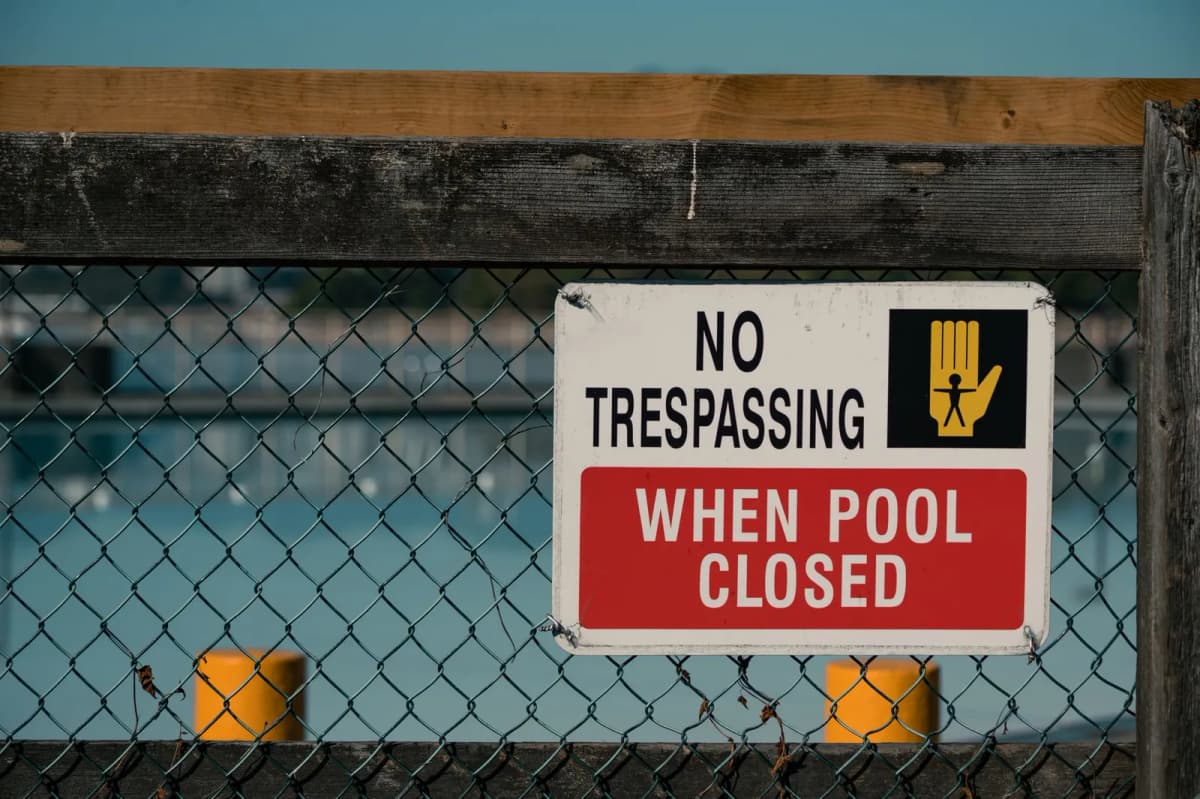
Photo by Caio on Pexels
Guests
At the pool, the guest rule decides who gets in when the deck is full. The pieces are a per-household guest limit, a requirement that a resident be present with their guests, and a way to identify who's a resident, such as a key fob, a wristband or a sign-in sheet.
Tie the guest rule to capacity and safety. Be careful with any rule that names children or an age. Familial status is a protected class under federal fair housing law, and a pool rule keyed to age can run into it. Have the association's attorney review any age-based line before it goes on the sign.
Safety and conduct rules
These are the rules that protect swimmers and the association's budget:
- No glass anywhere on the pool deck.
- No diving where the depth doesn't allow it.
- Swim diapers for anyone who needs them.
- No running on the deck.
- No one swims while the pool is closed, for any reason.
- Gates stay closed and latched.
A propped-open gate defeats the fence, and the fence is what keeps a small child out of the water after hours. Check the self-closing, self-latching hardware at opening and on a schedule the board sets and records.
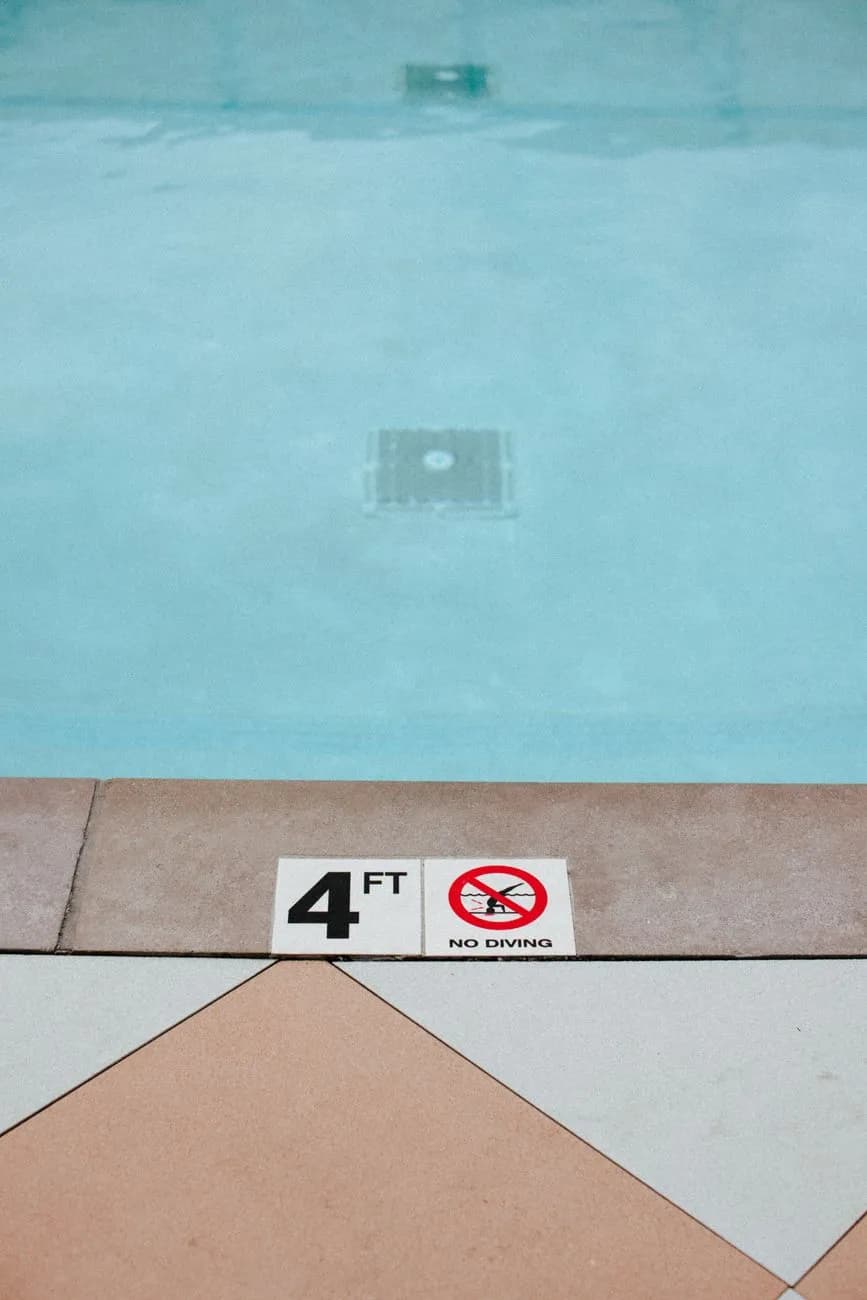
Photo by K on Pexels
Keep the pool records
If someone gets hurt, the questions that follow are about what the association knew and what it did. The inspection logs, the water testing records, the vendor's certificate of insurance and the minutes showing the board adopted the rules will answer those questions. Ask your pool contractor for a current certificate every season, and read it against what your contract requires. The guide to verifying vendor COIs walks through what to check.
Adopt the rules at an open board meeting, post them at the pool entrance, and send them to every household before the pool opens.
If the board needs to manage capacity, HOA-OS lets residents reserve pool time online, and an emergency closure goes out by text and email to every resident who's opted in. Both are on the Community plan; see hoa-os.com/pricing.
Related Reading
- The HOA Preventive Maintenance Calendar
- Vendor Insurance: Why Your HOA Must Verify COIs
- HOA Insurance: The Coverage Your Board Really Needs
The health department's off-season answer is the one the board still has time to act on.