
A guest policy looks simple: a number, a resident-present rule, a sign at the gate. The first full Saturday at the pool shows which parts the board didn't think through.
The guest policy sits under the association's broader amenity rules, which means it needs the same foundation: authority in the documents, adoption at an open meeting, and equal application to every household. It also carries a fair housing risk.
Guest limits
A guest limit exists to protect capacity. Owners pay for the pool and the clubhouse through their assessments, and a policy that lets one household fill the deck every weekend shifts the cost of the amenity onto everybody else.
One structure is a per-household limit on guests at one time, sometimes with a larger allowance for a reserved event. Set the number against the amenity's real capacity and any occupancy limit the health department or fire marshal has set, and write it as a number.
Decide what counts as a guest before the rule goes up. Anyone who doesn't live in the home is the simplest definition. Visiting relatives, a nanny, a caregiver and a weekend houseguest all fall somewhere in that definition, and residents will ask about each of them.
Resident-present requirements
A resident-present rule requires a resident to be there while their guests use the amenity. It gives the association someone responsible for the guests' conduct, and it stops a key fob from becoming a free pass for friends.
Write down how it works in practice. Does the resident have to stay for the whole visit, or only check guests in? Can a resident sponsor guests at the clubhouse without attending, as part of a reservation? Whatever the answer, it applies to board members' households too.
Where tenants fit
When an owner leases the home, the tenant lives there. Whether the tenant gets amenity access, and whether the owner gives it up while the home is leased, depends on the declaration. Your declaration may let an owner pass amenity rights to a tenant for the length of the lease, or it may say nothing, and then the board has to decide how to handle it.
Don't write the guest policy so that a tenant ends up treated as the owner's guest. That leaves a household that can use the pool only when a landlord who lives elsewhere shows up. The post on whether renters pay HOA fees covers how the owner and the tenant split obligations generally.
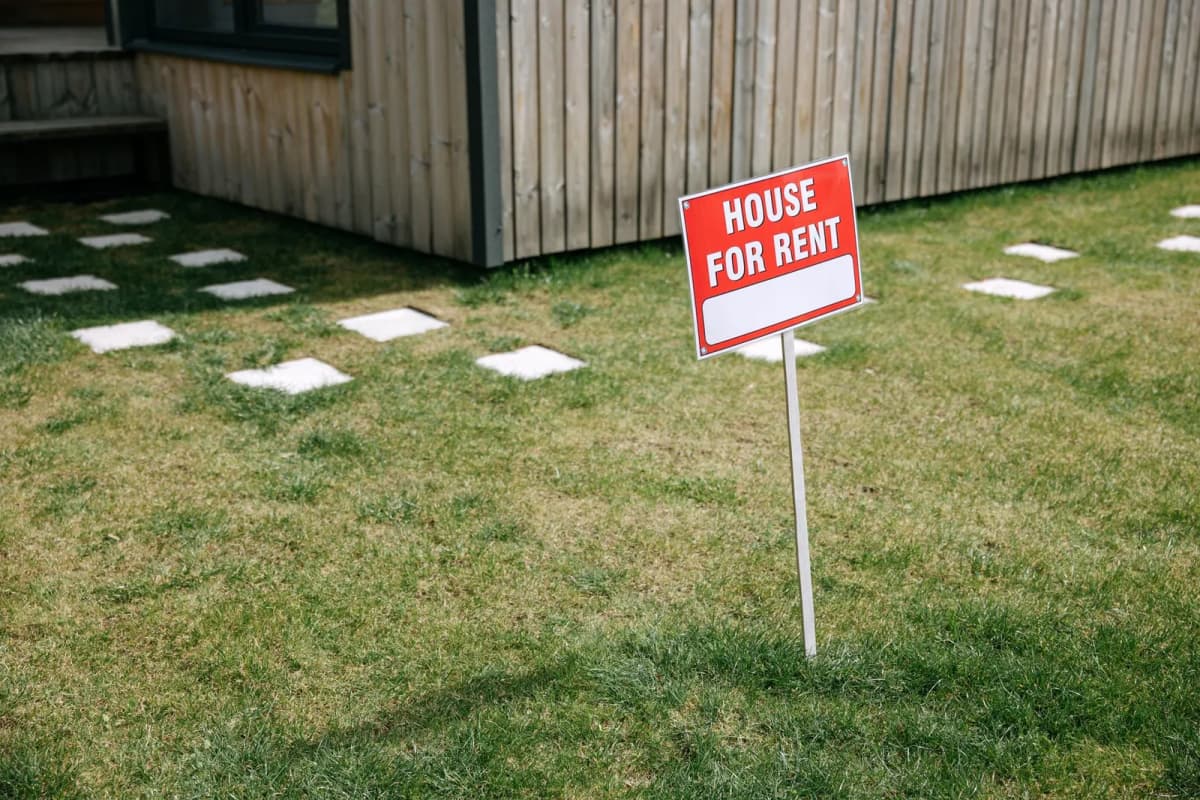
Photo by Ivan S on Pexels
The fair housing line
The federal Fair Housing Act prohibits discrimination based on familial status, among other protected characteristics. The Justice Department's overview of the Act explains that it "prohibits discrimination in housing against families with children under 18." The statute's text at 42 U.S.C. 3604 reaches past the sale or lease itself: it bars discrimination "in the terms, conditions, or privileges of sale or rental of a dwelling, or in the provision of services or facilities in connection therewith," because of familial status. It also bars any "notice, statement, or advertisement" with respect to the sale or rental of a dwelling that indicates a preference or limitation on that basis. Have counsel read what goes on the sign as well as the policy behind it.
That's where a guest policy can cross the line. Rules worth a second look:
- Adult-only hours at the pool or clubhouse.
- A rule barring children from an amenity entirely.
- Guest limits that count a household's own children as guests.
- Supervision rules keyed to a specific age.
Whether any of these holds up turns on the exact wording and on details specific to your community and state. Have the association's attorney review any rule that names children, minors or an age before it's adopted or posted. Communities designated as housing for older persons are a separate case, which the Justice Department's overview also mentions; that designation has its own requirements and isn't something a board can assume.
The fair housing mistakes guide covers the other places associations run into the Act.

Photo by Get Lost Mike on Pexels
Enforcing the policy
A guest policy gets enforced at the gate by whoever is on duty, so keep it simple enough to apply on the spot. Whoever's at the gate needs to know who's a resident, how many guests they have, and what happens when the limit's exceeded. Log repeat problems with a date and a household, and handle them through the association's normal enforcement process, with the notice and hearing steps the documents require.
In HOA-OS the board publishes the guest policy with the other amenity rules on the community site, and each home's violation history stays on its own record. The community site and violation tracking are both on the Community plan, listed at hoa-os.com/pricing.
Related Reading
- Fair Housing Mistakes HOAs Don't Know They're Making
- Do Renters Pay HOA Fees? Clear Answers for Landlords and Tenants
- When Your HOA Needs a Lawyer (And When It Doesn't)
The rule carries the association's name, and so does any complaint about it.