
Many HOAs hold some property besides the homes: an entrance sign, a pond, a stretch of walking path, a mailbox kiosk. Depending on the state and the documents, that property is called the common area or the common elements. A board that knows which pieces belong to the association, and which belong to a lot owner, can answer the repair question it hears most often. Whose job is this?
The terms below come from two state statutes, Florida's and North Carolina's, read with single-family and townhome boards in mind. Many condominium documents use the same words, and the same reading works there. Our guide to CC&Rs goes article by article through what a declaration usually contains.
Common area and common elements, defined
Both phrases name the same basic idea: property the association owns or controls for the community, separate from the lots that owners hold one by one. Which phrase your community uses usually comes from two places. One is the declaration, the recorded document that places the land under its covenants and the association's control. The other is your state's statute.
The declaration's covenants generally bind every owner, including owners who bought long after it was recorded, because courts in many states treat the covenants in a recorded declaration as equitable servitudes.
In a typical single-family or townhome community, common area might include the entrance, private streets, a pool, a pond and its banks, and an open green with a walking path around it. The plat, the recorded map of the subdivision that shows each lot and each common parcel, usually draws those parcels with a label such as "common area" or a tract letter.

Photo by RDNE Stock project on Pexels
Common area under Florida's HOA statute
Florida's HOA statute defines "common area" as "all real property within a community which is owned or leased by an association", along with property dedicated for the use or maintenance of the association or its members. Dedicated here means set aside for that purpose, typically on the plat or in another recorded document.
That definition reaches past land the association holds title to. Leased land counts, and so does land dedicated for the association's use or maintenance. A Florida board listing its common area should start from that wider definition.
Florida's definitions section also defines a parcel as a platted or unplatted lot, tract, unit or other piece of real property described in the declaration that can be sold on its own, whose owner must be a member of the association and pay assessments. Assessments are the charges the association levies on owners to fund its budget. In Florida's terms, common area sits on one side of the line and parcels on the other.
Who maintains common elements in North Carolina
North Carolina's Planned Community Act uses the terms "common elements" and "limited common elements" for planned communities. Its section on upkeep of a planned community sets a default split: except to the extent the declaration provides otherwise, the association is responsible for maintenance, repair and replacement of the common elements, and it may assess lot owners for those costs. Unless the declaration provides otherwise, each lot owner maintains and repairs their own lot and its improvements.
The upkeep section also gives the association access rights. Owners must give the association access through their lot, or through a limited common element assigned to that lot, when the association needs it for that maintenance work. Owners must also give other owners access when necessary. As a hypothetical, a board that needs to reach a common-area drainage pipe running behind a row of townhomes has a starting point in the statute for asking.
That opening condition, that the declaration can provide otherwise, carries a lot of weight. The act sets a default, and a declaration can move the line in either direction.
Limited common elements: shared by some owners
Generally, a limited common element is part of the common area or common elements that the documents set aside for the use of one owner or a small group of owners. Where a declaration uses the term, a common example is a driveway shared by two townhomes, or a stoop or small patio that serves one home but sits on common area. Whether a particular driveway or stoop is a limited common element depends on how your declaration and plat describe it.
The label matters mostly for maintenance and cost. North Carolina's upkeep section treats the cost of limited common elements separately, assessing it under a different provision of the act. Many declarations charge the cost of a limited common element to the owners it serves. Read yours to see what it says.
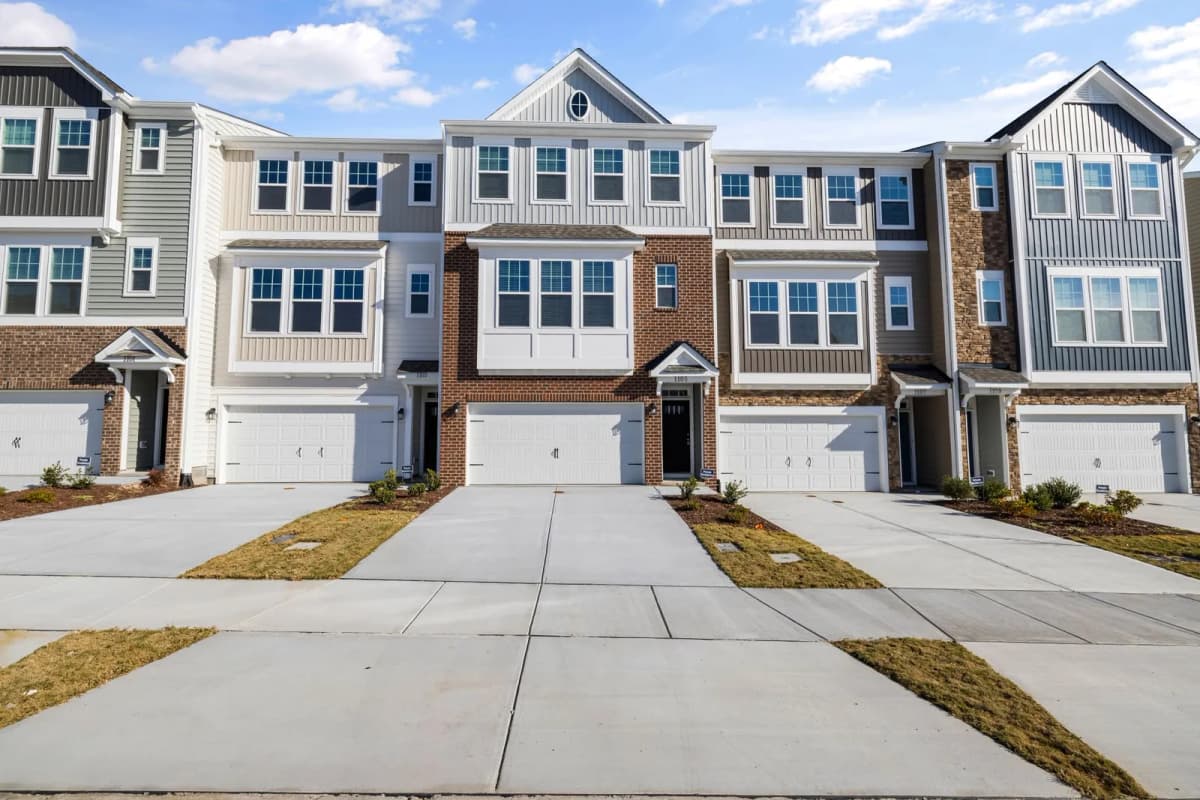
Photo by Curtis Adams on Pexels
Where the maintenance and insurance line falls
The declaration's maintenance article is where many communities draw the line. It may say the association maintains all common area and each owner maintains everything on the lot. It may also move specific items, such as townhome roofs, exterior paint or fences, onto the association. The common splits are laid out in our maintenance responsibilities guide.
Insurance tends to follow ownership. In many documents, the association insures what it owns and maintains, and owners insure their own lots and homes. Where the declaration puts a townhome roof on the association, check whether the insurance article puts it there too. If the two articles don't match, raise the gap with the association's insurance agent.
For the policies themselves, see our post on the coverage a board needs.
The plat matters as much as the text. The declaration says what counts as common area; the plat shows where it is. Owners sometimes treat the strip of common area behind their lot as part of their yard, and the plat is the first place to check where the common area begins.
Reading your own declaration and plat
Work through these with the documents open:
- Pull the recorded declaration, its amendments and the recorded plat.
- Find the definitions article and note which terms your documents use: common area, common elements, limited common elements or something else.
- Read the maintenance and insurance articles side by side. List anything the association maintains on a lot and anything an owner maintains on common area.
- Mark which items are limited common elements and how their cost is charged.
For your community, the controlling text is your own declaration and your state's statute, and both can differ from the two above. Where a repair is disputed, hold off on paying for it until the association's attorney has read the maintenance article.
The board tags each document in HOA-OS, so the plat and the declaration that holds the maintenance article can both carry a maintenance tag. Each file's visibility setting also governs the resident assistant: when an owner asks what the declaration says about a shared driveway, it quotes the declaration only to people allowed to open it.
Sources
- Florida Statutes 720.301, Definitions, The Florida Senate
- G.S. 47F-3-107, Upkeep of planned community; responsibility for damage, North Carolina General Assembly
Related Reading
- HOA Maintenance Responsibilities: Who Fixes What
- HOA Insurance: The Coverage Your Board Really Needs
- HOA Amenity Rules That Hold Up
- HOA Reserve Studies: What They Are and Why You Need One
When the line between common area and an owner's lot stays fuzzy, the board ends up paying for repairs the declaration put on an owner, or arguing over repairs it skipped that were its own, and both come out of the same budget.