

Budget season is not one meeting in November. It is a six-month sequence, and boards that treat it as a single evening's work end up voting on numbers nobody had time to question.
Here is the timeline, assuming a calendar fiscal year. If yours starts in July or October, shift every step by the same number of months.
July and August: gather
Nothing gets decided in these two months. The job is collecting facts.
Pull twelve months of actual expenses by category. Request renewal quotes from your landscaping, pool, and pest vendors, and ask your insurance agent for a renewal estimate. Utility providers publish announced rate changes; find them. Check whether your reserve study is due for an update, and commission it now rather than in October.
Then look at what the association is actually responsible for. If the component list in your reserve study has not been walked in a few years, walk it. A reserve study is only as good as its inventory.
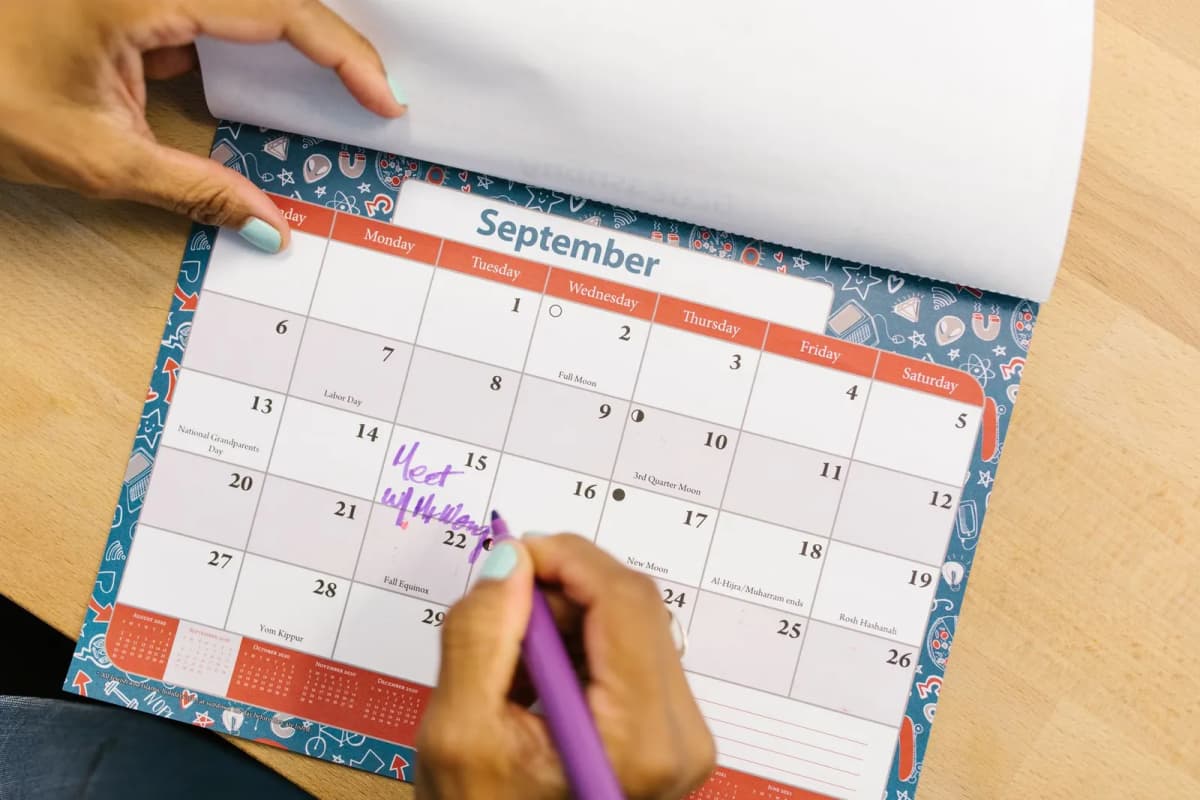
Photo by RDNE Stock project on Pexels
September: draft
Build the operating budget from actuals and signed renewals, not from last year's budget plus a percentage. Add the lines boards forget: bad debt, legal and collections, tax preparation, reserve study updates, insurance deductible exposure, and a real contingency. Our full walkthrough of how to create an HOA budget covers the sequence in detail, and the line-item template gives you the categories to copy.
Set the reserve contribution from the study before you start trimming anything else. How much is enough is a question with a defensible answer, and answering it first keeps the reserve line from becoming the residual.
Also this month: settle any classification arguments in advance. If the board is planning work that might be an upgrade rather than a replacement, decide which fund pays before it hits the draft. The test is in our post on capital improvement versus maintenance.
Send owners a short note that budget season has started and name the cost pressures you already know about. No numbers yet. A note in September takes the surprise out of December.
Photo by Vitalii Melnichenko on Pexels
October: check the constraints
Read your declaration and bylaws for the board's assessment authority, any cap on annual increases, notice periods, and whether owners have a right to reject the budget. Read your state's association act for the same, or its nonprofit corporation act if your state has no association-specific statute. This is the step that determines whether your draft is a decision the board can make or a proposal owners must vote on.
If the increase you need clears the cap, decide now whether you are running the vote or phasing the increase. Both are workable in October and neither is workable in December. Our guide to raising dues without starting a revolt covers the mechanics and the messaging.
Two other October items worth calendaring. First, budget the tax preparation. The IRS return for homeowners associations, Form 1120-H, is an election an association makes each year, and only if it meets the qualification tests in the tax code; the alternative is the standard corporate return, Form 1120. Your preparer will tell you which one the association qualifies for and which produces the better result.
Second, remember the standard you are working to. Board members owe a fiduciary duty to the association, and your bylaws and state nonprofit corporation act set what has to be recorded. Put the budget decision and its reasoning in the minutes, not in a hallway conversation.
November: publish, then adopt
Publish the draft budget with the proposed dues figure two to three weeks before the vote. Show the per-month dollar change, the reserve contribution, and the categories that drove the increase. Invite written questions and answer them in writing.
Then adopt it at an open meeting, with the vote count and reasoning in the minutes. Follow whatever notice or mailing requirement your documents and your state statute set, since several states fix a minimum notice period for the budget meeting specifically. If your state gives owners a ratification window, the clock starts here and you need to know exactly when it closes.
December: send it
One message, not three: the adopted budget, the new dues amount, the effective date, and payment instructions. Set up autopay for anyone who wants it before January 1, because the cheapest collection is the payment that happens automatically.
Owners who want to understand the increase in their own terms will appreciate context on why HOA fees keep going up.
All year: watch the variance
The budget is a plan, and plans meet reality in month three. Review budget-versus-actual monthly with the reserve balance next to it. When a gap opens, split it into timing, overspend, and unbudgeted before choosing a response. The ranked options are in our post on what to do when the budget falls short, where a special assessment sits at the bottom of the list for a reason.
The one-page version
- July to August: actuals, renewal quotes, insurance estimate, reserve study current
- September: draft operating and reserve, first owner note, classification calls settled
- October: documents and statute checked, cap decision made, tax prep budgeted
- November: draft published, questions answered, budget adopted in open meeting
- December: adopted budget and new dues sent, autopay set up
- Monthly: budget versus actual reviewed, reserve balance reported, variance explained
Six months of small steps rather than one long night. The sequence is the hard part, not the arithmetic.
Related Reading
- HOA Reserve Studies: What They Are and Why You Need One
- HOA Financial Management: A Treasurer's Year-Round Playbook
- HOA Treasurer Duties: A Plain-English Job Description
Budget season is a records problem wearing a finance costume: the actuals, the renewals, the reserve schedule, and the notices all have to be findable at once. That is the part HOA-OS is built to hold. See what each plan includes.