

An ARC application, often called an ARC request, is the form an owner fills out before changing the outside of a home or lot. When it's complete, the architectural review committee (ARC) can decide from the pages in front of it. When it isn't, the ARC spends its meeting writing back for a drawing, a color name or a fence height.
Most of that gets settled when the board designs the form. For where the ARC's authority comes from and what it controls, start with what the architectural review committee is and what it controls.
Start with what your documents require
The form can't reach further than the declaration does. Read the declaration's architectural article and any guidelines it authorizes, and list the changes they say need approval. That list becomes the first question on the form: what kind of change is this?
California writes part of this into statute. Under California Civil Code section 4765, where a common interest development's governing documents require association approval before an owner makes a physical change to their separate interest or the common area, the association must provide a "fair, reasonable, and expeditious" procedure. That procedure has to be included in the governing documents, carry prompt deadlines and state the maximum time for a response.
The form's instructions should say what the procedure says about what to submit and where to send it. Outside California, the declaration and your state's law decide what the procedure contains.
The fields a complete ARC application carries
Each field should answer a question the ARC asks during review. A working set:
- Owner name, lot number, property address, phone and email.
- A plain description of the change: what's being built, replaced, added or removed.
- Location on the lot, shown on a site sketch or plot plan with the property lines, the house and the distance from the change to the nearest lot lines.
- Plans or drawings. A measured hand sketch may be enough for a fence; an addition usually calls for drawings.
- Materials and colors, by product name, manufacturer color name or code, or a physical sample.
- Dimensions: height, length, width and footprint.
- Contractor name and contact, with planned start and finish dates.
- Neighbor acknowledgment, only where the declaration or guidelines require it.
- Owner signature and date.
If your documents call for adjacent owners to sign that they've seen the plans, include that line and say whose signature counts. If they don't, leave it off; a step the documents never created gives an owner a fair complaint.
The signature line can carry a short statement the owner agrees to: the work will follow the application as approved, and any change to the plan comes back to the ARC first. If the form will live on the community website, putting a request form on your website covers the setup.
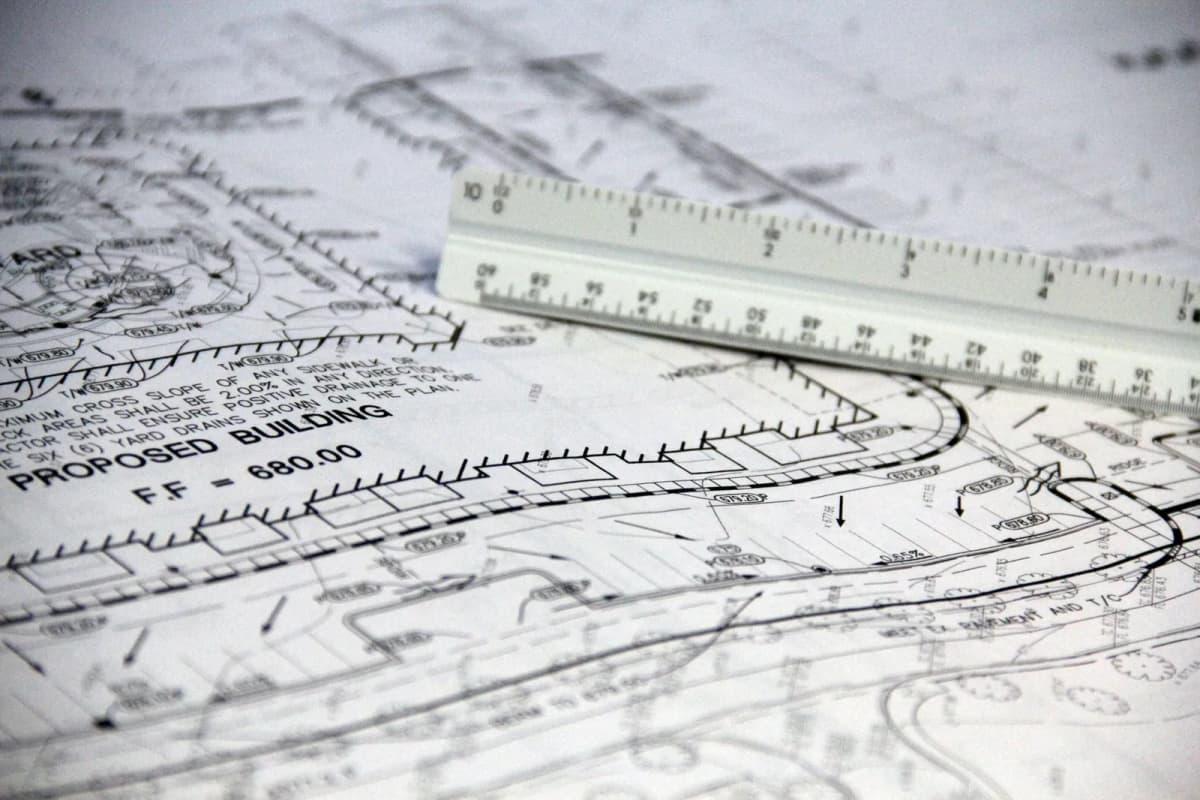
Photo by John Guccione www.advergroup.com on Pexels
Attachments that let the ARC decide
Attachments show the ARC what the fields describe. List on the form which attachments each type of change needs. As an example only, since your guidelines decide:
- Exterior paint: the color name and code for each surface, and a current photo of the house.
- Fence: a site sketch with the fence line and gates, the height and the material.
- Shed: a site sketch with distances to the lot lines, the dimensions, and materials and colors.
- Addition: drawings, a site plan and the exterior materials list.
What the form should leave out
Florida's statute on architectural control, Florida Statutes 720.3035, gives Florida HOAs clear examples.
The association may not require an owner to obtain a government-issued building permit as a prerequisite for the association's review of proposed construction. On a Florida form, a building permit shouldn't appear as a required attachment for review.
The association also may not adopt or enforce a rule that limits or sets requirements for the interior of a structure that isn't visible from the parcel's frontage, an adjacent parcel, an adjacent common area or a community golf course. The section bars requiring plan review for a central air-conditioning, refrigeration, heating or ventilation system that isn't visible from those places and is substantially similar to one the association or committee already approved or recommended. Fields asking about interior work that isn't visible from those places don't belong on a Florida form.
Where the declaration or authorized guidelines give options for materials, size, design or location, the same Florida section bars the association and its committees from restricting an owner's right to choose among them. A dropdown on the form should list every option the guidelines allow and no fewer.
Other states set their own limits, and some say nothing on these points. Before the form goes into use, have the association's attorney read it against the declaration and your state's law.
Keep the form and the annual notice in step
California adds a second document the form should match. Section 4765 requires the association to notify members each year of any requirement for approval of physical changes. The notice describes the types of changes that need approval and includes a copy of the review procedure.
When the form's list of change types matches the notice's list, an owner reading either one gets the same answer. In any state, it helps to draft the form, the procedure and any annual notice from one list and update them together.
A completeness check on receipt
Before the ARC reviews the merits, someone confirms the application is complete:
- Every required field is filled in.
- The attachments the form lists for this type of change are there.
- Colors and materials are named closely enough to check against the guidelines.
- Dimensions appear, and they match between the description and the drawings.
- The neighbor acknowledgment is attached where the documents require it.
- The owner has signed and dated it.
Date-stamp the application when it arrives. If something is missing, ask for it in writing and name the item. Whether a review deadline counts from receipt or from a complete application depends on your documents, and how to handle HOA architectural review requests faster covers putting review on a clock.
Keep the application, its attachments, any requests for missing items and the decision in one file. Owners and future boards may ask to see them, and the board's obligations on records requests are easier to meet when each file is complete.

Photo by cottonbro studio on Pexels
Where HOA-OS fits
HOA-OS has a form builder with 14 field types, including file upload, signature, date, address, dropdown and checkbox. Submitted applications arrive in the submissions inbox, one place to review, route and act on each one, and the ARC committee workflow lets the ARC review homeowner change requests. Document storage holds the declaration and the guidelines the form points to. The board decides what the form asks, and the ARC decides each request.
Sources
- California Civil Code Section 4765, Justia
- Florida Statutes 720.3035, Architectural control covenants; parcel owner improvements; rights and privileges, The Florida Legislature
Related Reading
- How to Handle HOA Architectural Review Requests Faster
- CC&Rs Explained: The Rulebook Your HOA Runs On
- HOA Meeting Minutes: What to Include and Why It Matters
With every field and attachment requested up front, the board avoids decisions made on a guess about the plans and the back-and-forth of chasing owners for pieces the form never asked for.