
An owner submits an architectural request for rooftop solar. The CC&Rs, drafted in 1994, say no roof-mounted equipment of any kind. The board denies it. The owner comes back with a statute.
The board loses.
This is one of the most common ways an HOA discovers that a covenant on its books is unenforceable. Solar access laws exist in a majority of states, and where they exist, they override the recorded restriction. But the laws almost never strip the board of authority entirely, and the boards that read them carefully keep real control over how panels go up.
The general rule: a flat ban usually fails
Texas is a good example because the statute is specific. Under Texas Property Code Chapter 202, a property owners' association may not include or enforce a provision that prohibits or restricts an owner from installing a solar energy device, and a provision that does so is void. Not "unwise," not "disfavored." Void.
Florida goes further in its plainness. Under Florida Statute 163.04, a deed restriction, covenant, or declaration may not prohibit or have the effect of prohibiting solar collectors from being installed on buildings within the covered lots. The statute also awards costs and reasonable attorney fees to the prevailing party in litigation under the section, which tells you how seriously the legislature meant it.
The pattern repeats across states with solar access laws. The exact wording varies, the enforcement mechanism varies, and a handful of states have no such law at all. But if your community is in a state with one, the covenant in your CC&Rs is not the operative rule. The statute is.

Photo by Robert So on Pexels
What boards can still enforce
Here is the part boards miss. These statutes protect the right to install, not the right to install anywhere, any way, without asking.
The Texas statute is unusually explicit about what an association may still require. It permits an association to prohibit a device that does not conform to the slope of the roof, or whose top edge is not parallel to the roofline, or whose frame, bracket, or visible wiring is not in a silver, bronze, or black tone commonly available in the marketplace. It permits the association to require prior approval before installation. And it allows the association to designate where on the roof panels may go, unless the alternate location the owner wants would increase production by more than ten percent under National Renewable Energy Laboratory standards.
Florida's statute takes a similar shape. The association may determine the specific location on the roof, within an orientation to the south or within forty-five degrees east or west of due south, so long as that determination does not impair the effective operation of the collectors.
Read those together and the real rule emerges. A board can regulate appearance, conformity to the roofline, wiring and hardware color, and specific placement, right up to the point where its choice would meaningfully reduce how much energy the system produces. Past that point, the owner wins.
What this means for your architectural review process
Three things follow, and all three are process problems rather than legal ones.
Stop denying on the basis of the old covenant. If your CC&Rs contain a flat solar ban and you are in a solar access state, that paragraph is not enforceable. Denying on it does not just lose the case, it hands the owner an attorney-fee claim in states like Florida.
Adopt a written solar policy that lives inside the statute. Say what you require: prior submission, roof-plane conformity, hardware color, and a preferred location with the production-loss exception spelled out. An owner who gets a clear standard up front usually meets it. An owner who gets a vague denial goes and finds a lawyer.
Decide on a clock. Most architectural requests die in the gap between submission and a board that meets once a quarter. Set a response window, put it in writing, and hit it. A request that sits unanswered for four months is the kind of thing that turns a routine approval into a dispute.
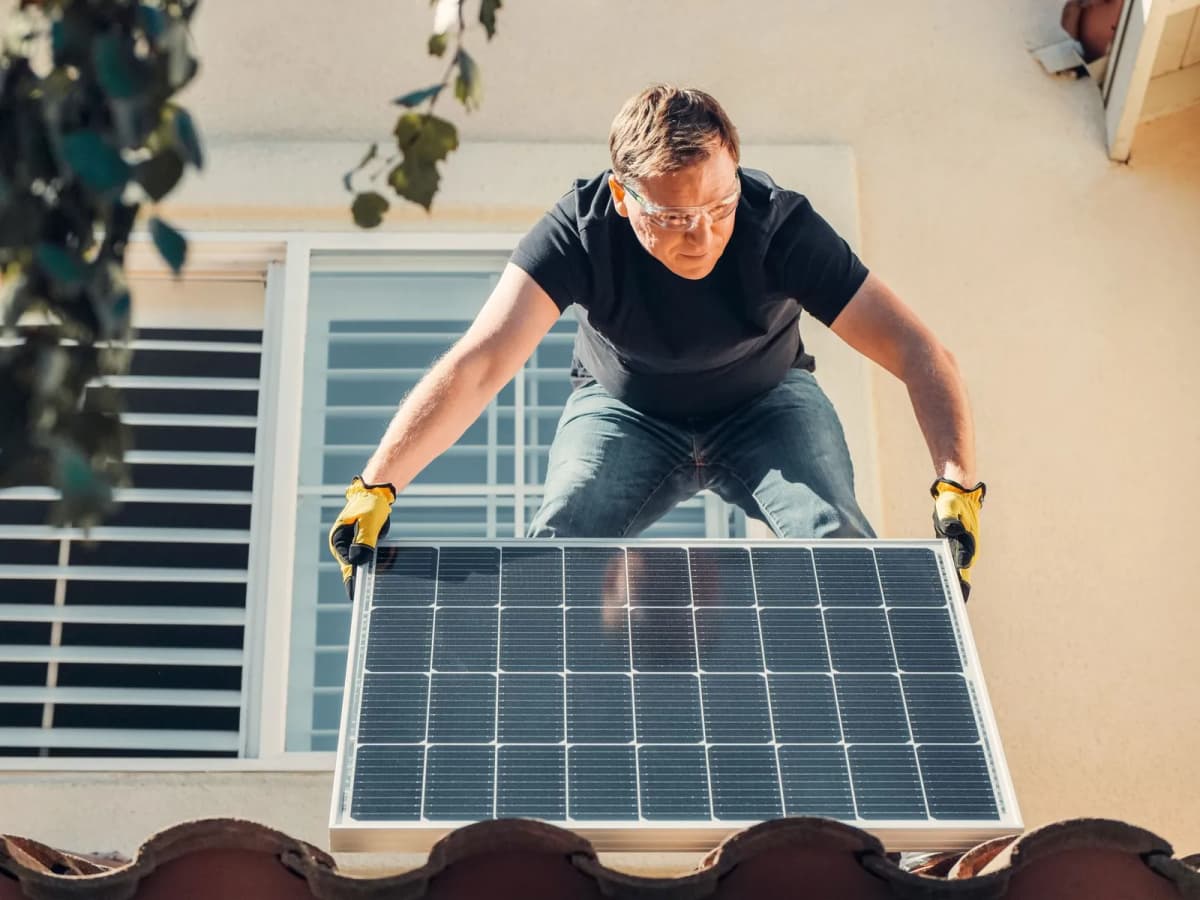
Photo by Kindel Media on Pexels
Check your own state before you do anything
The two statutes above are illustrative, not universal. Solar access protections differ meaningfully state to state in what they cover, whether they reach ground-mounted arrays, how they treat common elements, and whether they apply to condominiums at all. Some states protect clotheslines and rain barrels in the same breath. Some protect nothing.
Two practical steps for any board:
- Pull your state's solar access statute and read it against your CC&Rs. Note every covenant it voids.
- Get counsel's sign-off before you deny a solar request in a state you have not checked.
This is a pattern that repeats across HOA law. The recorded document says one thing, the statute says another, and the statute wins. It is the same reason a board cannot enforce a pet restriction against an assistance animal, which we cover in HOA pet restrictions.
And if the covenant is genuinely out of step with the law, the honest fix is to change it rather than to keep enforcing something unenforceable. Start with CC&Rs explained, then the step-by-step guide to amending your CC&Rs.
The short version
An HOA in a solar access state cannot ban rooftop solar. It can require approval, control placement within limits, and set appearance standards for hardware. Write that policy down, apply it to everyone, and answer requests on a schedule. That is the whole job.
HOA-OS tracks the response window on every architectural request and surfaces the ones running out of time, so no request sits for a quarter waiting on a meeting. See pricing.
Sources
- Texas Property Code, Chapter 202, Texas Legislature
- 2026 Florida Statutes, Section 163.04, The Florida Senate